Appearance
Handprints
A handprint is a cookieless user tracker that allows you to track malicious or fraudulent users, even when they change their clients or networks. It includes a patent-pending identity graph, which in turn is composed of multiple fingerprints.
An example handprint is shown below.
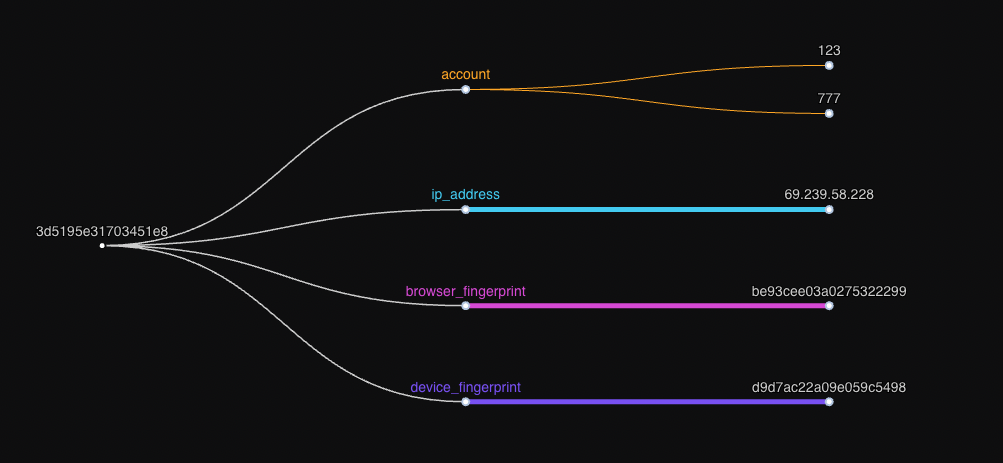
Handprints are more resilient to session changes than cookies and less sensitive to client changes than a single fingerprint. They can be used to detect when a single user is associated with muliple accounts, and can ensure a user's reputation (good or bad) persists even when they change clients or networks.
Digits
Each node in the handprint graph is called a digit. There are different types of digits, including:
| Digit type | Description | Added via |
|---|---|---|
Accounts | User identifiers that are unique to your system / application | SDK - honeypot.identify() |
Network fingerprints | The user's network | Automatically |
Browser fingerprints | A collection of client-side properties that are unique to the user. | Automatically |
Device fingerprints | A hardware identifier | Automatically |
Lifecycle
Handprints are designed to be long-lived. However, the stickiness of a handprint depends on whether or not a user is engaging in undesirable behavior.
For flagged users, a handprint is sticky. In other words, the identity graph will be retained indefinitely to ensure the user's reputation follows them as they use your platform.
On the other hand, to respect the privacy of users who are not engaging in bad behavior, handprints may rotate from time to time for unflagged users. If this is undesirable for your use case, please reach out to the Honeypot team.